
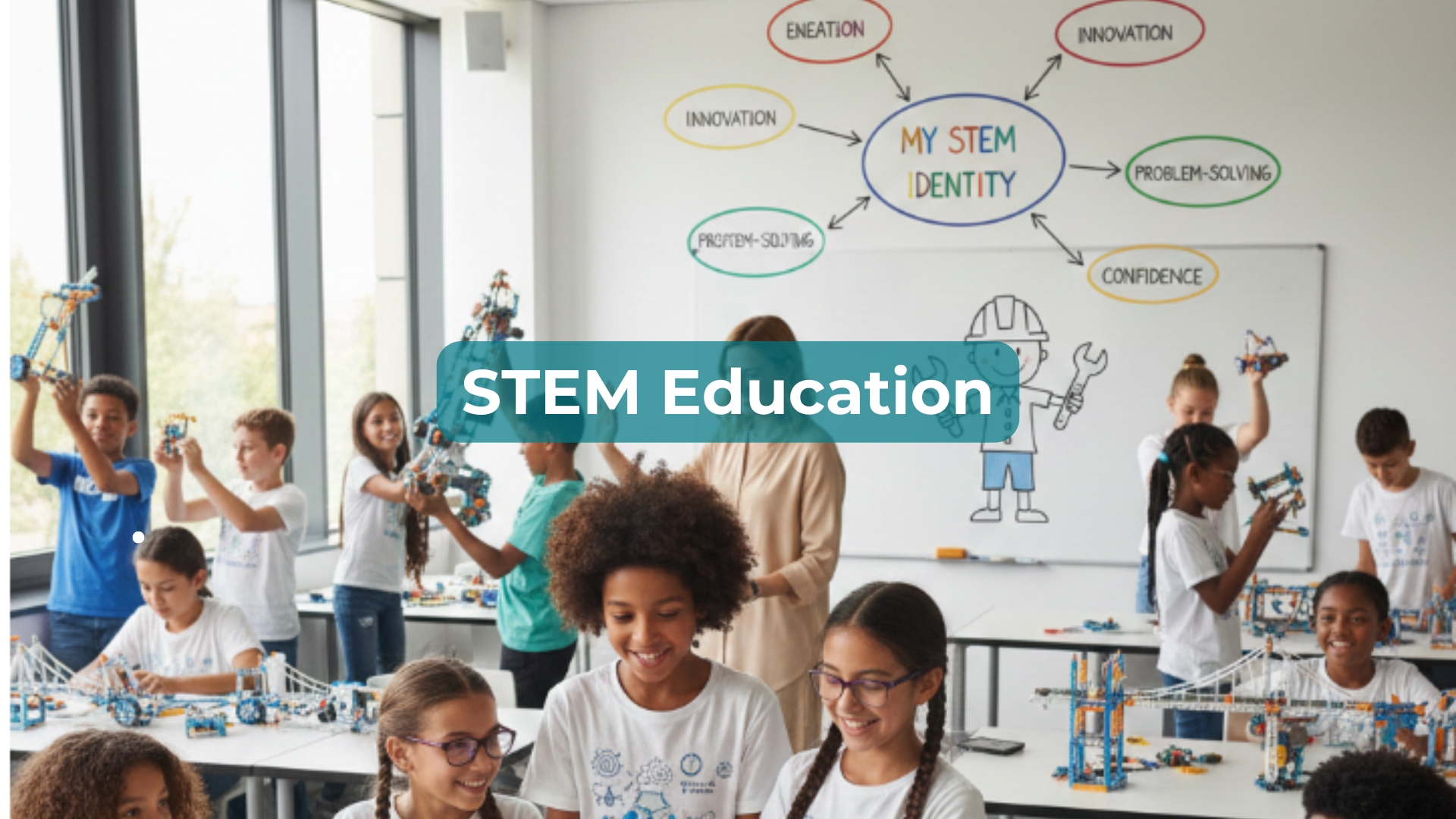
You watch your five-year-old build a tower of blocks, knock it down, and rebuild it taller. You see your six-year-old ask why the sky changes color at sunset. These moments reveal something vital: young children are natural scientists and engineers. They test ideas, solve problems, and learn from failure without fear.
However, there is a biological clock ticking that many parents don't realize. By age 5, a child's brain has already grown to 90% of its adult size. The neural pathways that shape how they approach challenges and view their own abilities are forming right now. Waiting until middle school to introduce STEM education means missing the critical window when these foundations take root.
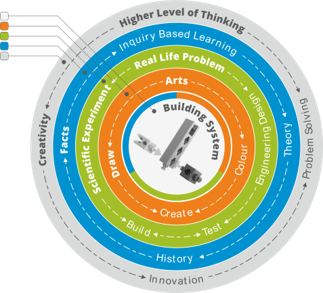
At Acton Academy Calgary Central, we don’t just "teach" science; we use the award-winning Engino Education system to ensure children see themselves as capable innovators before societal stereotypes or self-doubt can set in.
Why STEM Education Needs to Start Before Age 7
Research shows that ages 2–7 represent a peak period for brain development, where children form 1 million neural connections every minute. This is also the stage where gender stereotypes and "math anxiety" begin to take hold. By age 6, many children start absorbing subtle messages about who "belongs" in science or who is naturally "good" at building.
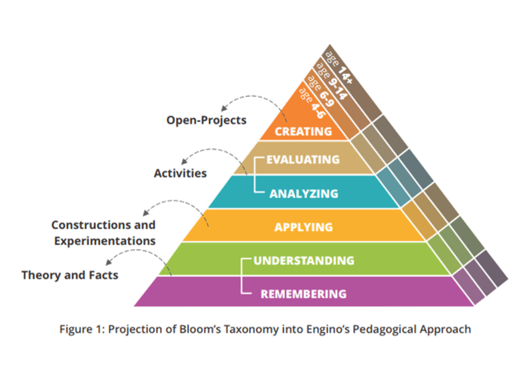
Starting STEM education before age 7 means catching children while they still believe they can do anything. Our program utilizes Bloom’s Taxonomy of cognitive learning to move students beyond simple memorization and into the "Creating" stage. By introducing these concepts early, we protect their natural curiosity and replace potential self-consciousness with a sense of mastery.
Establishing a STEM Identity Through Spiral Learning
There is a massive difference between a child who enjoys a toy and a child who identifies as a builder. This shift—from "doing an activity" to "being a problem solver"—is the cornerstone of our Engino-powered curriculum. This is what we call building a STEM identity.
To make this identity stick, our program utilizes a Spiral Learning method. We don't just visit a topic once; we gradually introduce and reinforce robotics and engineering principles, returning to them with increasing complexity as the child grows. This ensures that when a child faces a difficult challenge, they have a deep-seated foundation of competence to lean on.
Identity doesn't come from worksheets or lectures; it comes from:
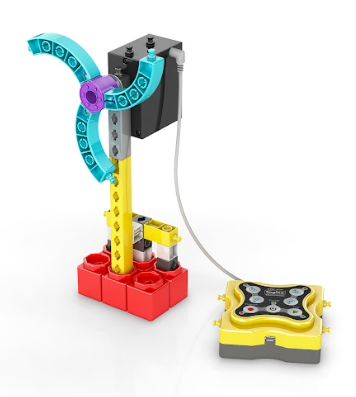
- Building machines that actually work: Using Engino’s unique snap-fit system to see physics in action.
- Coding robots that follow commands: Seeing logic come to life through their own input.
- Real-World Connections: Linking every lesson to local landmarks, like Calgary’s bridges, to show that STEM education isn't just a school subject—it’s the way the world is built.
The Learn-By-Doing Approach: Creating Real-World Engineers
Real STEM education looks nothing like a traditional classroom. Based on Piaget’s theory of cognitive development, our curriculum recognizes that children learn best through tactile, physical interaction. In our Lab, learners aren't just following a manual; they are engaging in open-ended projects that require critical thinking.
Whether they are designing solar-powered cars or building wind turbines to collect energy data, they aren't reading about what engineers do—they are engineers. Research confirms this: 64% of educators list hands-on learning as the most effective approach for long-term retention.
Our daily schedule protects long blocks of time for this deep, focused work. When a child moves through the cycle of challenge, effort, mistake, and adjustment, they develop self-efficacy. This is the core belief that they can figure things out on their own. This confidence doesn't just stay in the lab; it translates into every other aspect of their lives, from sports to social interactions.
Beyond the Classroom: Empowering Curiosity at Home
The habits and confidence built through early STEM education extend far beyond our studio walls. We encourage parents to bring the "Socratic approach" into their daily home life.
Instead of providing immediate answers when a child struggles, try asking:
- "What surprised you about how that moved?"
- "How did you solve that challenge when it fell over?"
- "What do you think would happen if we changed this part?"
These reflection prompts help children develop metacognitive awareness—the ability to think about their own thinking. When you reinforce these habits at home, you confirm to your child that they are a "solver," someone who looks at a problem not as a wall, but as a puzzle waiting for a solution.
Elevate Their Potential: Join Our Free STEM Education Workshops
The research is clear: early STEM education builds the neural pathways and the personal identity required for a child to thrive in a complex world. It transforms natural curiosity into a permanent engineering mindset.
We invite you to experience this transformation firsthand at our free, hands-on workshops at our Calgary campus. Watch your child engage with the Engino system and tackle projects that integrate robotics and makerspace concepts.
- Ages 4–6 & 7–9: Carefully structured experiences designed to meet your child where they are developmentally.
- Inaugural Opportunity: We are currently offering an Inauguration 30% Discount for our founding families. With only 40 spots available, this limited enrollment ensures your child receives the personalized attention they need to grow.
Your child's natural curiosity is a gift. Nurture it now, while the window of development is wide open. Join us for a free workshop and watch your child’s STEM education journey—and their identity as a problem solver—take flight.


