
Is a Montessori Preschool the Right Fit for Your Child?
See how a Montessori preschool supports independence, focus, and practical skills. Learn which traits suggest a natural match and what to ask before enrolling.
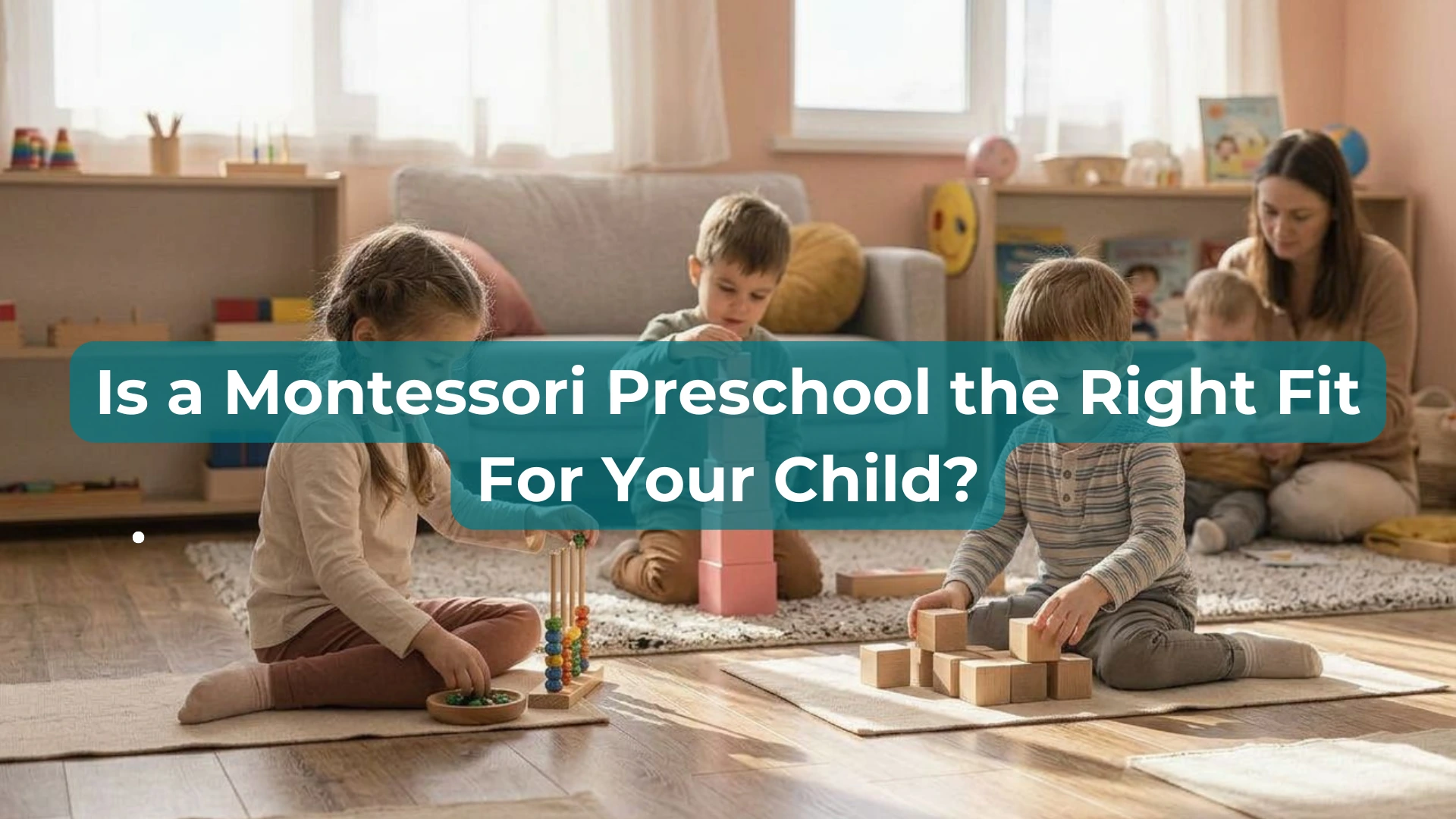
Two children can walk into the same Montessori preschool classroom and have completely different experiences. One feels at home immediately, absorbed in a task within minutes. The other spends weeks watching from the edges, unsure where they fit. Same room, same guide (teacher), same materials. Different child, different outcome.
That gap is about fit. And when it comes to choosing a Montessori preschool, fit matters more than reputation, location, or what worked for your neighbour's kid. This post will help you think through whether a Montessori-style environment matches your child's personality, needs, and stage of development right now. No model is universally right. The goal is to understand the match.
What a Montessori Preschool Environment Is Designed to Encourage
Montessori preschool classrooms are built around a few core ideas. Children choose their own activities from a prepared set of materials. They work at their own pace. Adults guide rather than direct. The environment is calm, ordered, and designed to make independence possible.
In practice at a Montessori preschool, this means children spend long, uninterrupted blocks of time on self-selected tasks. They work alongside peers of different ages. They learn practical life skills like pouring, folding, and caring for their space. And they're expected to develop focus, self-direction, and intrinsic motivation over time.
At Acton Academy Calgary Central's Wonder Studio, this approach is built into the full-day preschool experience for children ages 3 to 6. The environment draws on Montessori principles while also weaving in hands-on, play-based learning that supports curiosity and creativity. As described on the campus page, it's a space where children's imaginations thrive and their self-assurance grows.
Children Who Often Thrive in a Montessori-Inspired Setting
Certain traits tend to align well with this kind of environment. But these traits don't need to be fully formed before a child starts. Many children grow into them with the right support.
Independent Explorers
Some children are naturally curious and self-initiating. They move from one activity to the next without needing an adult to tell them what to do next. They ask questions, investigate, and enjoy figuring things out on their own.
These children often settle quickly into Montessori preschool classrooms because the environment is built for exactly that kind of exploration. There's always something to discover, and the freedom to pursue it without waiting for permission.
Deep Focus Learners
Some children want to do the same puzzle fifteen times. They pour water from one container to another, reset it, and do it again. This isn't stubbornness. It's mastery in progress.
Montessori preschool environments support this kind of repetition. Large blocks of uninterrupted work time mean a child can stay with something until it clicks, rather than being pulled away by a bell or a group transition. Children who learn this way often build real confidence through practice.
Practical Helpers
Children who love helping around the house, setting the table, watering plants, or tidying up often take to the practical life activities in a Montessori preschool quickly. These tasks aren't fillers. They build coordination, responsibility, and a sense of genuine contribution.
When a three-year-old successfully prepares a snack or cares for a classroom plant, that's not a small thing. It builds self-esteem in a way that praise alone can't replicate.
Children Who May Need Extra Support in This Environment
A child doesn't need a "Montessori personality" to do well in a Montessori preschool setting. But some traits may mean the adjustment takes longer, or that the right school fit requires more careful evaluation.
Highly Social or Energetic Children
Children who love movement, noise, and group play can still thrive in a Montessori preschool environment. But parents should ask real questions about how the school balances focused work time with outdoor play, physical activity, and collaborative tasks. Some children need time and structure to learn when to settle and when to move.
Children Who Prefer Direct Instruction
Some children look for step-by-step guidance before they feel safe trying something independently. That's not a problem. It's a starting point. Good Montessori guides build independence gradually through modelling, clear routines, and gentle encouragement rather than pushing children into open-ended choices before they're ready.
Sensitive or Slow-to-Warm Children
Cautious children often need time to observe before they participate. They do best in environments with predictable routines, calm adults, and no pressure to perform before they feel ready. A well-run Montessori preschool classroom can offer all of that. But parents should look carefully at how the school handles transitions and how guides respond to children who need more time.
Questions to Ask Before Choosing a Preschool
Beyond personality labels, a few practical questions can help you evaluate fit more clearly.
How Does My Child Respond to Choice?
Some children light up when given options. Others freeze. If your child tends to get overwhelmed by too many possibilities, look for a school that offers structured choice rather than fully open-ended selection. A good Montessori guide can narrow options while still preserving a child's sense of agency.
How Much Structure Helps My Child Feel Secure?
Montessori isn't unstructured. It has clear routines, expectations, and boundaries. But the structure looks different from a traditional classroom. The Wonder Studio schedule provides blocks of time for both focused work and imaginative play within age-appropriate guidelines. For children who need predictability, that rhythm can be genuinely settling.
What Kind of Adult Guidance Brings Out Their Best?
Some children respond best to a warm, directive teacher. Others open up when an adult steps back and asks questions instead of giving answers. At Acton Central, guides create conditions for learning rather than directing it. They ask questions, observe, and step in when needed. That style works well for children who are ready to take ownership. For children who need more scaffolding, the transition may take time.
Looking Beyond Preschool: The Bigger Question of Learning Fit
Preschool is often the first time parents make a deliberate choice about how their child learns. But the same questions don't disappear after age four. They just get more complex.
From Early Independence to Self-Directed Learning
Children who enjoy ownership, choice, and meaningful work often carry those traits forward. As they grow, they may benefit from environments that continue to support self-direction rather than shifting to a one-size-fits-all pace. Acton Academy Calgary Central's mastery-based model is built on exactly that idea: understanding determines when a child moves forward, not a fixed timeline.
Why Hands-On Learning Matters as Children Grow
Young children learn through doing. That doesn't change as they get older. Children who go through a full-day preschool experience like Wonder Studio don't just learn letters and numbers. They learn to lead a meeting, revise a decision, and respect a group agreement. Those skills compound. At Acton Central, older learners continue building through quests, projects, and real-world problem-solving.
The Role of Character and Personal Growth
Independence, resilience, empathy, and self-awareness aren't subjects you can schedule. They develop through daily experience. At Wonder Studio, guides use practices like Character Call-Outs to name the virtues they observe in children, helping kids begin to see those qualities as part of who they are. Older learners at Acton Central continue that work through Socratic discussions that build the habit of thinking carefully, listening well, and forming their own views.
Signs a Different Preschool Style Might Be a Better Match
Choosing a non-Montessori option over a Montessori preschool isn't a failure. It's a thoughtful decision based on what your child actually needs right now.
When More Guided Group Play May Help
Some children come alive in group storytelling, dramatic play, music, and collaborative games. They need frequent teacher-facilitated interaction to feel engaged and connected. A play-based or more teacher-led environment may serve those children better, at least at this stage.
When Movement Is a Top Priority
If your child has strong physical energy and sensory needs, ask directly how much outdoor time and gross motor activity the school provides. Some children genuinely struggle to sustain focused independent work for extended periods. That's worth knowing before you commit.
How to Observe Your Child Before Making a Decision to Join a Montessori Preschool
You don't need a formal assessment to understand your child's learning style. Watch them at home.
Watch Their Play Patterns
Do they play independently for stretches of time, or do they need a playmate to stay engaged? Do they repeat activities, or move quickly from one thing to the next? Do they invent their own tasks, or wait to be told what to do? These patterns tell you a lot about how they'll respond to a self-directed environment.
Notice Their Response to Frustration
Frustration tolerance varies widely in early childhood. When something is hard, does your child try again, ask for help, walk away, or fall apart? There's no wrong answer. But a child who needs significant adult support through frustration may need more scaffolding than some Montessori settings provide by default.
Consider the Whole Child, Not One Trait
Children are complex and they change. A shy child can be fiercely independent. An energetic child can concentrate deeply when the task is right. A cautious child can become confident with the right support and enough time. Don't make a school decision based on a single characteristic.
Choosing an School Environment Where Your Child Can Grow
The best preschool is one where your child is known, respected, challenged, and supported. That means looking at personality, emotional readiness, learning preferences, and your family's values together, not just ticking boxes on a checklist.
If you're thinking beyond the preschool years and wondering what a school looks like when it consistently supports independence, curiosity, and real-world learning, it's worth exploring how Acton Academy Calgary Central approaches education at every stage. Take a look at our learning design, our studios, and what a day in the life actually looks like here.
We have a limited number of spots available for families who want to be part of building something different from the ground up. If that resonates with you, it's worth reaching out sooner rather than later.


